
CORD and DIRT Explained
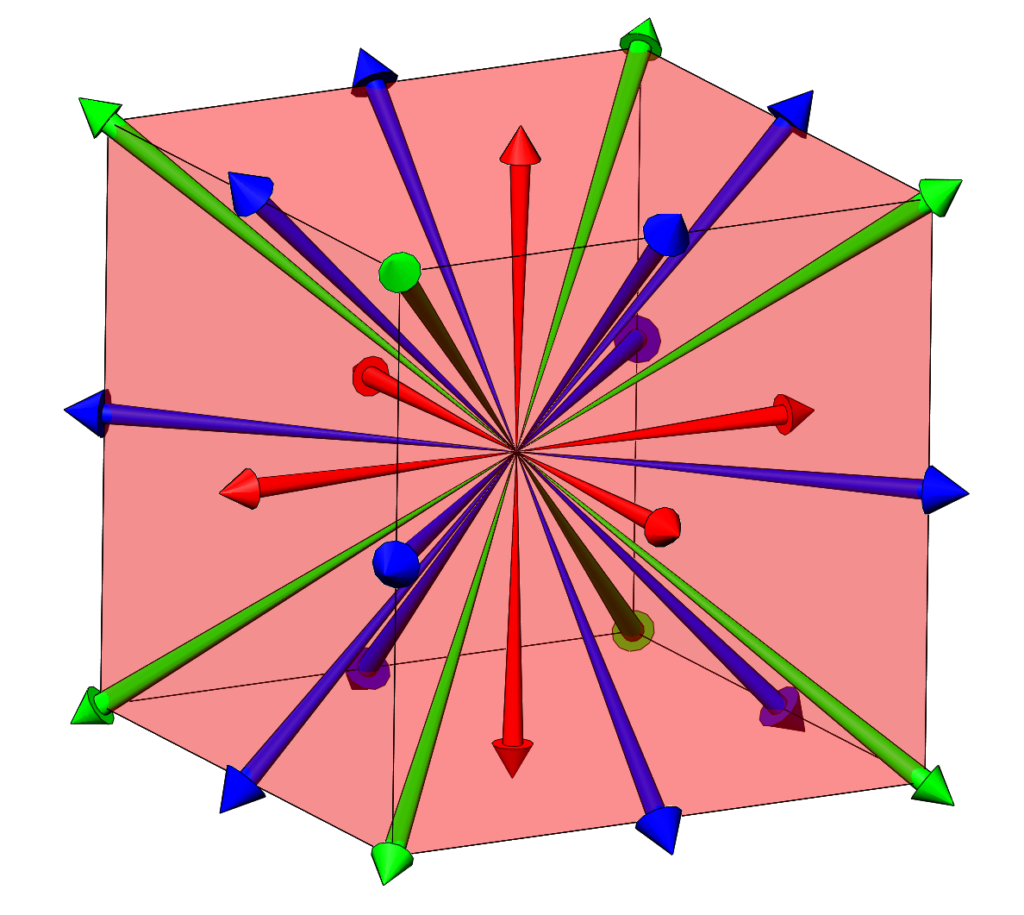
CORD = Axis system defined by Red + Green + Blue arrows ( half-lines ) on cube.
- Red = face centers of cube = gives ‘C’ part of CORD = C axis system.
- Check out all 6 fundamental models in C axis system
- Green = corner of cube = face centers of octahedron = gives ‘O’ part of CORD = O axis system.
- Check out all 8 fundamental models in O axis system
- Blue = edge centers of cube = face centers of rhombic dodecahedron = Gives ‘RD’ part of CORD = RD axis system.
- Check out all 14 fundamental models in RD axis system
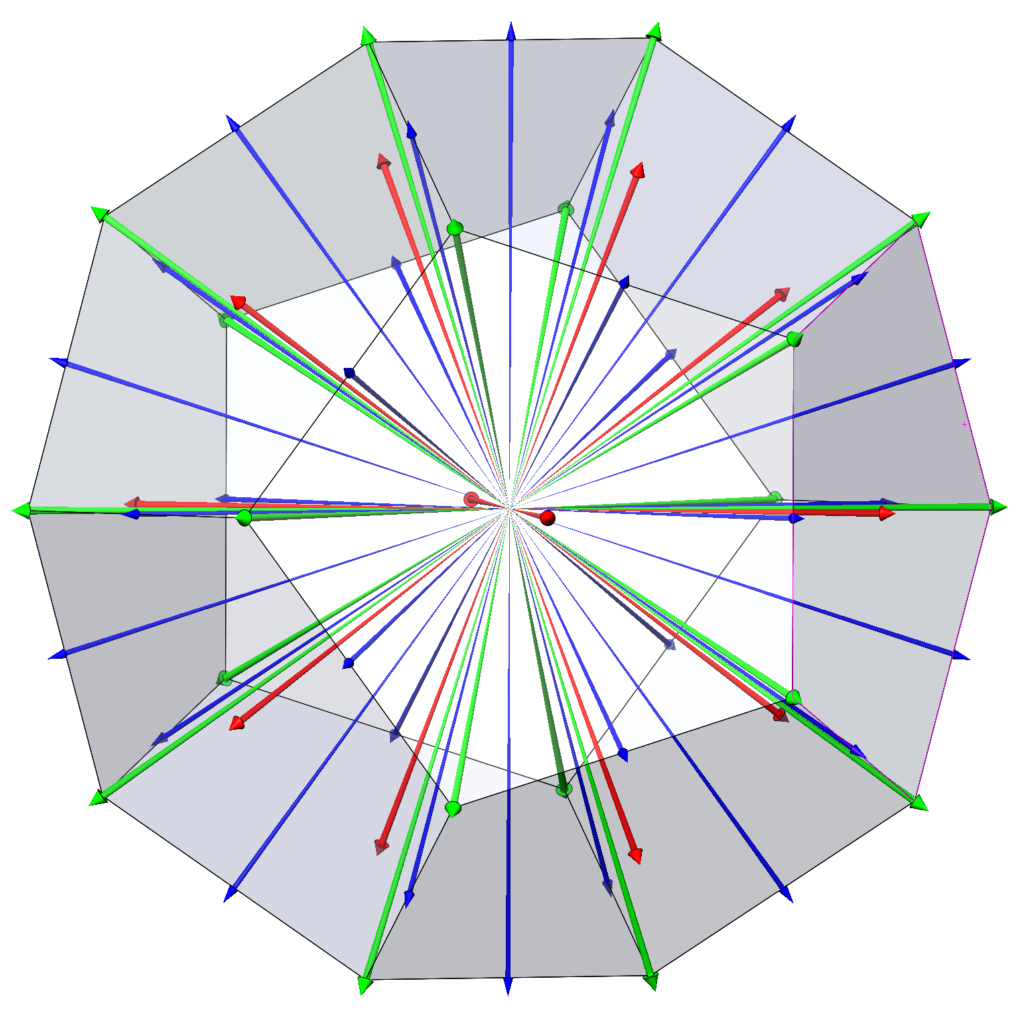
DIRT = Axis system defined by Red + Green + Blue arrows ( half-lines ) on dodecahedron.
- Red = face centers of dodecahedron = gives ‘D’ part of DIRT = D axis system.
- Check out all 12 fundamental models in D axis system
- Green = corner of dodecahedron = face centers of icosahedron = gives ‘I’ part of DIRT = I axis system.
- Check out all 24 fundamental models in I axis system
- Blue = edge centers of dodecahedron = face centers of rhombic triacontahedron = Gives ‘RT’ part of DIRT = RT axis system.
- Check out all 56 fundamental models in RT axis system
Due to duality, such act of combining half-lines from geometric center to face centers, edge centers and corners into one bundle based on other Platonic solids will not produce new axis system. The majority of existing twisty puzzles are based on these two axis systems. This is why CORD and DIRT are convenient.
When combined with model numbers, it is relatively easy to define a puzzle down to exact mesh topology ( single layer single axis system ). Below are some examples.
- Standard 3x3x3 cube = C5
- Megaminx = D5
- Helicopter Cube = RD6 ( But why the cuts look different? That is another topic to cover. )
- Dino Cube = O6
- Penultimate = D12
- Big Chop = RT56
- Tuttminx = D1I3 ( Not exact but this example shows why fundamental models need to start from isolated circles, i.e. the very first ones in all lists of fundamental models. )